
Uncategorized
The Hidden Danger of Counterfeit PMU Pigments — And Why It Matters for You and your clients
May
Permanent makeup is a precision art – but it’s also a health procedure. The pigments you choose don’t just affect how a result looks fresh off the machine. They determine how safely and beautifully that result heals…
And right now, the South African PMU market has a serious problem that every artist and client needs to know about!
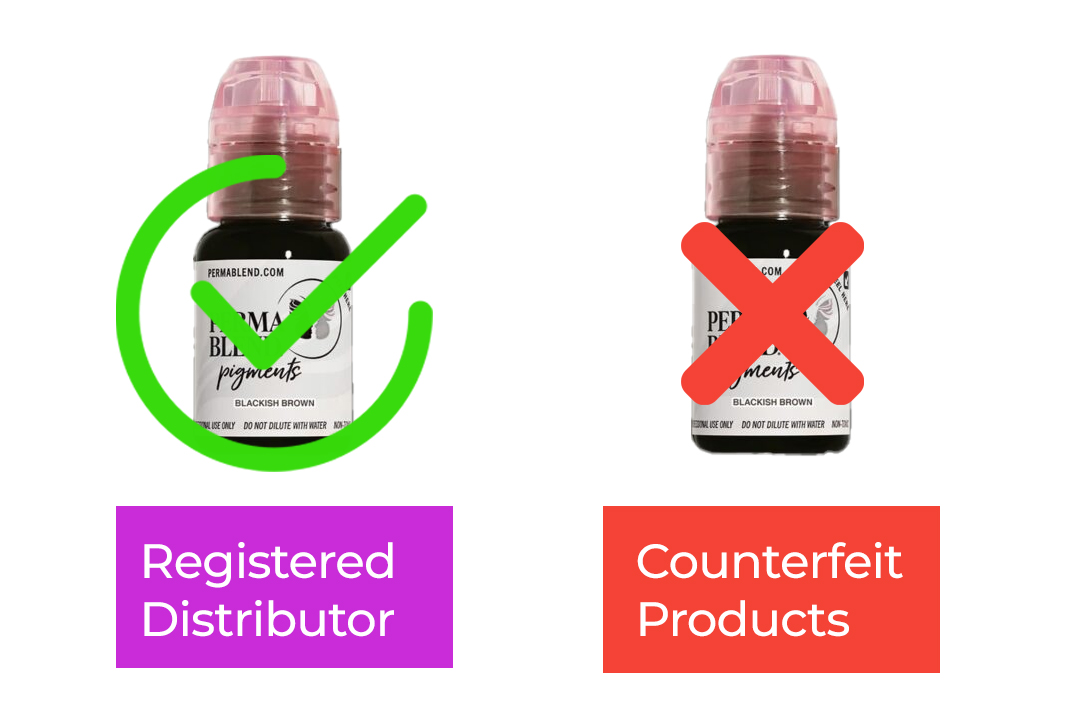
Counterfeit pigments look identical. That’s what makes them dangerous.
The counterfeit pigment trade is sophisticated. Fake versions of popular PMU ink brands are produced in unlicensed facilities, packaged in near-identical bottles… same labels, same colour names, sometimes even the same batch number formats; and sold at tempting prices, sometimes even by trusted suppliers!
To the naked eye, a counterfeit pigment is indistinguishable from the real thing. It may have the same consistency, the same colour in the bottle, and even smell similar. There is no simple way for a PMU artist to look at a bottle and confirm it is genuine.
⚠ What counterfeit pigments actually contain.
Unlicensed pigments are produced without oversight, meaning they can contain heavy metals (including lead, arsenic, and nickel), unsafe preservatives, and unsterilised suspending agents. These substances are not disclosed on any label. They are implanted directly into your client’s skin, where they remain indefinitely.
The real damage shows up during healing
This is where counterfeit pigments reveal themselves. Unlike a fresh application, which can look flawless, the healing process exposes everything. Clients may experience prolonged redness, swelling, and inflammation far beyond what is normal. Pigment can heal patchy, muddy, or with unpredictable colour shifts. In more serious cases, granulomas (small inflammatory nodules) can form, and allergic reactions, some severe, can occur weeks or even months after the procedure.
For the client, this means pain, distress, potentially costly removal or correction treatments, and lasting skin damage. For the artist, it means reputational damage, client disputes, and potential legal liability… even though you acted in good faith.
Why certification is the only reliable guarantee
Reputable PMU pigments earn their safety credentials through rigorous third-party testing and compliance with international health authority standards.
Both World Famous and Perma Blend hold internationally recognised safety certifications covering their manufacturing facilities, ingredient purity, and finished products. These certifications are independently verified, not self-declared, and represent the same level of scrutiny applied to medical-grade manufacturing worldwide.
Counterfeit pigments carry none of these certifications; because obtaining them is expensive, time-consuming, and requires genuine compliance. That’s precisely why counterfeiters cut corners, and why the only safe pigments are sourced from certified importers who can verify the chain of custody from manufacturer to your studio.
These are the certifications that matter:
EU REACH 2022
The EU’s chemical safety regulation bans compounds in tattoo and PMU pigments known to cause cellular damage, genetic harm, or skin sensitisation. Every batch of every colour must be independently laboratory-tested and documented.
ISO 9001 & ISO 13485
ISO 9001 certifies manufacturing quality management. ISO 13485, typically required for medical device manufacturers, sets an exceptionally high bar for sterility and process control in pigment production.
CTL Certification
CTL GmbH is an accredited European laboratory that tests the purity and safety of tattoo pigments for full regulatory compliance. CTL certification is considered one of the most thorough endorsements in the industry.
FDA Monitoring
While the US FDA does not pre-approve pigments, it actively monitors adverse reactions and has issued recalls on contaminated inks. Leading brands manufacture in compliance with FDA guidance and sterility requirements.
How to protect yourself and your clients
The simplest rule: always buy from a verified, certified supplier who can provide documentation confirming the product’s origin and compliance credentials. If a pigment is being offered at a price that seems too good to be true, or through an unofficial marketplace, treat that as a serious warning sign.
Ask your supplier: Can you provide the manufacturer’s certifications for this product? Can you confirm this pigment meets EU REACH or equivalent international standards? A legitimate supplier will answer yes without hesitation. A counterfeit seller cannot.
Final Word
Your clients trust you with their skin. That trust begins with the decisions you make before they sit down in your chair; and the pigments you choose are one of the most important decisions you’ll make from an ethical, moral and financial standpoint.
